The word Hezbollah is composed of the two words hezb and allah, meaning "party" and "God" respectively, or simply "party of God". It is also commonly referred to as "the party" or el hezb.
Created in 1983, after Israel's invasion and occupation of Lebanon and it's capital, Beirut, in 1982 (the first ever occupation of an Arab capital by Israel,) its stated goal at that time was the creation of an islamic state in Lebanon, widely believed to be modeled after the Iranian revolution, but an alliance with a Christian party in Lebanon, Aoun's Free Patriotic Current, shows their tolerance to Lebanon's multi-sectarian culture. Its top priority historically however has been attacking Israeli soldiers on Lebanese soil.
Hezbollah's method of sustenance is unknown. The exact nature of this backing is presumed to be financial, technical, and military backing, with reports sometimes surfacing of Iranian Revolutionary Guards visiting Hezbollah in Lebanon to provide assistance. Military supplies had been shipped through the Syrian army supply lines when Syrian troops were stationed in Lebanon, yet Hezbollah's methods of rearmament now are through the black market.
As a way to remain popular with the local population mostly of the south, Hezbollah has involved itself in charity work, often compensating the families of fighters who have died and those whose homes had been destroyed by Israel. The lack of an equivalent system of providing help from the Lebanese government has been a key ingredient in remaining popular. Yet, the government is learning. Whilst Hezbollah will provide the rent of an apartment for a period of two years with furniture included (a sum amounting to US$12,000 per houshold), the government has decided to give LL50m (US$33,333) for every family that has lost a home. With 1500 lost homes during the war, that's the equivalent of the entire donation of Saudi Arabia, and of also the entire stated goal for the Stockholm donor's conference.
Thursday, August 31, 2006


Monday, August 21, 2006



Thursday, August 17, 2006


Half of Ramlet el Bayda was cleansed of most of the spilled oil on it's beach today and oil absorption pads were layed along the seafront which will absorb more oil that will come along it's shores. All that was needed was some heavy machienery, some shovels, buckets, and a few able-bodied men and women to clean the beach.
May this first "experiment" expand like a crystal to all the beaches in Lebanon, and to all the activists in Greenline and others... give yourselves a pat on the back.
Tuesday, August 15, 2006
Oil Spill Cleanup time!
The time to clean our beaches has finally arrived. Unfortunately the effetcs of the oil spill will be felt for years to come, and we might see oil on our beaches forever. However the more we delay in cleaning the beaches the more difficult it becomes to clean it.
Starting on Thurs 17th Aug 2006, work will commence on cleaning the oil spill in two shifts per day
Shift 1 = 9:00am - 12:30pm
Lunch = 12:30pm - 1:30pm
Shift 2 = 1:30pm - 6:00pm
Location: Ramlet El Baida
Personal protective equipment that will be provided will be:
- Goggles
- Masks with filters (we're actually short of activated carbon masks so find some and get some with you)
- Gloves
- Plastic Boots
- Overalls
For coastal cleaning, shovels and buckets will be provided.
For personal cleaning, hot-spots will be allocated to wash gloves and boots between shifts.
Greenline is organising this cleanup with help from various groups and NGOs. For any questions don't hesitate to call the coordinator 03 782469, she's a real cool chick ;-)
Starting on Thurs 17th Aug 2006, work will commence on cleaning the oil spill in two shifts per day
Shift 1 = 9:00am - 12:30pm
Lunch = 12:30pm - 1:30pm
Shift 2 = 1:30pm - 6:00pm
Location: Ramlet El Baida
Personal protective equipment that will be provided will be:
- Goggles
- Masks with filters (we're actually short of activated carbon masks so find some and get some with you)
- Gloves
- Plastic Boots
- Overalls
For coastal cleaning, shovels and buckets will be provided.
For personal cleaning, hot-spots will be allocated to wash gloves and boots between shifts.
Greenline is organising this cleanup with help from various groups and NGOs. For any questions don't hesitate to call the coordinator 03 782469, she's a real cool chick ;-)
Monday, August 14, 2006
Battle "one"
two hours and a bit into the first battle in the war for peace and it looks like the cease fire might hold, but i'll give it a full 24 hrs before i'll be too sure.
The only problem the Lebanese have is that we still have a blockade upon us. People, we need gas desperately!
Join us tonight for cease fire dinks, for tomorrow is a holiday here..
Peace.
The only problem the Lebanese have is that we still have a blockade upon us. People, we need gas desperately!
Join us tonight for cease fire dinks, for tomorrow is a holiday here..
Peace.
Sunday, August 13, 2006
Stuck between a Katyusha and a hard place
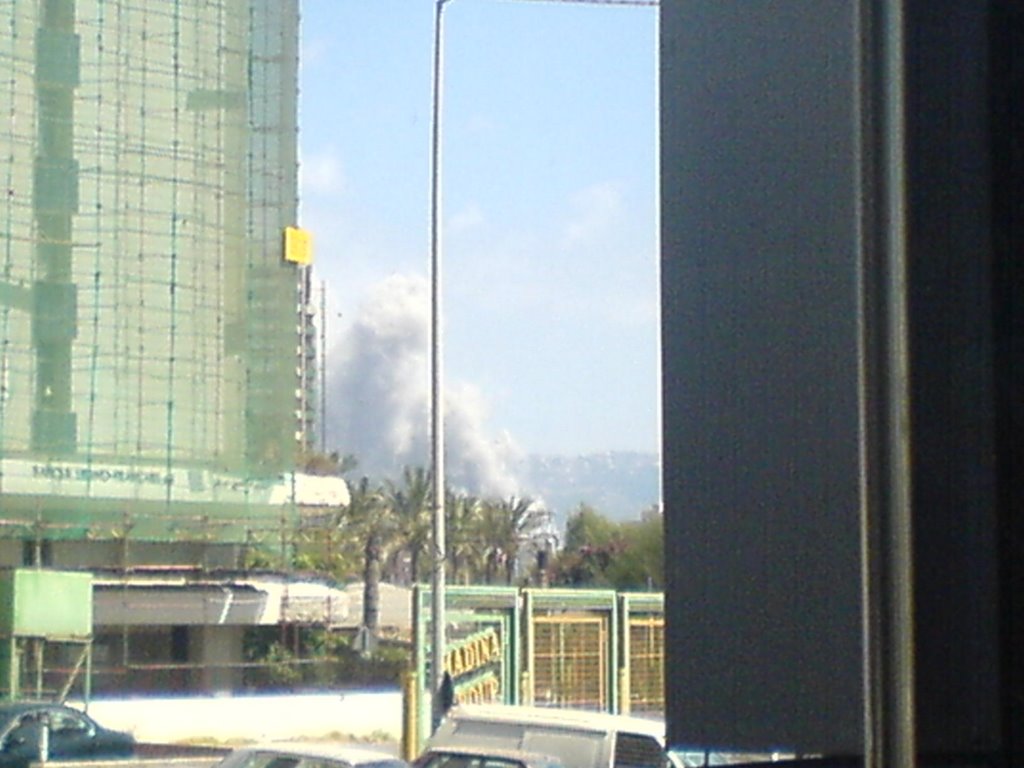 Bombing of Dahyeh this afternoon. People were hurt.
To many it seemed the beginning of the end scheduled for monday morning after everyone agreed in principle to UN res 1701, but hezbollah ended up refusing to discuss certain terms of resolution 1701 today (such as disarming), thus effectively cancelling the discussions that the lebanese gov't was supposed to engage in to finally end the war.
My intuition told me it was too good to be true. Looks like we have some more to endure.. We're stuck between the haters of the region and it continues to be only the innocent civillians of both Israel and Lebanon who pay the price. Noone, it seems, gives a shit about us enough to make a difference.
It's time to teach hate a lesson. The Lebanese people have dealt with 16 yrs of hate and there's NO reason why we can't deal with it again this time.
I just want to add that seeing pictures of smoke, and then seeing smoke rise live from buildings is a completely surreal experience..
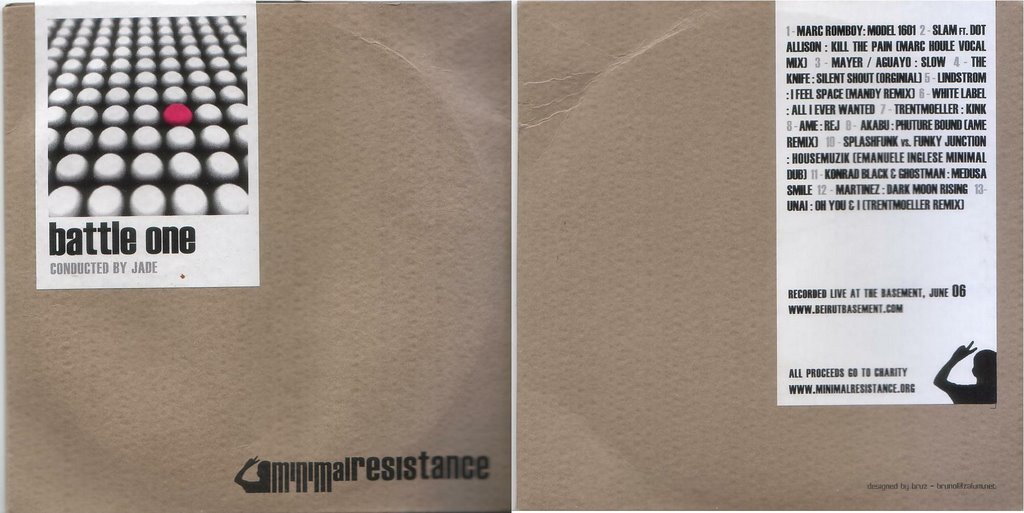
Just got back from one of the most amazing parties we've had in a looong time... and it's in times of war!... unbelievable lebanon... Middle of the forest, EXCELLENT minimal electro all night.. dancing all night... that familiar smell in the air.. (hey we WERE in the forest) Music was great, crowd was great, setting was amazing.. the only thing is that i think the valet dude took my car out for a spin (bastard)
The CD up there cost 10thou and the proceeds of that as well as the tickets all went to helping refugees.
The party was held in the name of PEACE! Yeah people PEACE! ...to the whole world! now that's what i'm talking about...
Saturday, August 12, 2006
Jamiroquai - Dynamite - (Don't) Give Hate a Chance
Why can't we be together?
Could you love me, don't hate me
I don't see (why can't we live together)
Maybe we could get it on.
Maybe we can get it on
Should be our destiny
There's a cold streak living inside us
There's no rainbows... just bullets and bombs
If you wanna rise up
We can make this hate stop
Now don't you wanna rise up
We've been giving hate a chance
(we've got all this love to give you know)
And the love will be running out for us
Can you feel the dreams of life
We're hoping we can still survive
As the wind carries every dove away
So why do we see these colours
It's only skin deep, don't mean a thing
So clear underneath this we're all brothers
Can't you see it's killing us.
can't you see it's killing us
Can't you see it's killing me
Trigger happy fantasy
So stand up and be, so strong now
Freedom is not so far away
If you know you wanna rise up
We can make this hate stop
Don't you wanna rise up
We've been giving hate a chance
(we've got all this love to give you know)
And the love will be running out for us
Can you feel the dreams of life
We're hoping we can still survive
As the wind carries every dove away
The wind, carries every dove away
The wind, carries every dove away
Every dove away
Dove Dove Dove Dove Dove Dove Dove
Now you've been taking our dignitiy for too long
I want to save this sanctity that we hold
And who's right and who's wrong
We're not so different anyway
Words are in this song
Can't we stop the fighting
We've been giving hate a chance
(we've got all this love to give)
And the love will be running out for us
Can you feel the veins of life
We're hoping we can still survive
As the wind carries every dove away
Don't give this hate a chance.
we've got this love to give you know
That this dream alive, will still survive.
untill no more people have to cry
Don't give this hate a chance.
we've got all this love to give you know
That this dream alive, will still survive.
untill no more people have to cry
And the love will be running out for us
Could you love me, don't hate me
I don't see (why can't we live together)
Maybe we could get it on.
Maybe we can get it on
Should be our destiny
There's a cold streak living inside us
There's no rainbows... just bullets and bombs
If you wanna rise up
We can make this hate stop
Now don't you wanna rise up
We've been giving hate a chance
(we've got all this love to give you know)
And the love will be running out for us
Can you feel the dreams of life
We're hoping we can still survive
As the wind carries every dove away
So why do we see these colours
It's only skin deep, don't mean a thing
So clear underneath this we're all brothers
Can't you see it's killing us.
can't you see it's killing us
Can't you see it's killing me
Trigger happy fantasy
So stand up and be, so strong now
Freedom is not so far away
If you know you wanna rise up
We can make this hate stop
Don't you wanna rise up
We've been giving hate a chance
(we've got all this love to give you know)
And the love will be running out for us
Can you feel the dreams of life
We're hoping we can still survive
As the wind carries every dove away
The wind, carries every dove away
The wind, carries every dove away
Every dove away
Dove Dove Dove Dove Dove Dove Dove
Now you've been taking our dignitiy for too long
I want to save this sanctity that we hold
And who's right and who's wrong
We're not so different anyway
Words are in this song
Can't we stop the fighting
We've been giving hate a chance
(we've got all this love to give)
And the love will be running out for us
Can you feel the veins of life
We're hoping we can still survive
As the wind carries every dove away
Don't give this hate a chance.
we've got this love to give you know
That this dream alive, will still survive.
untill no more people have to cry
Don't give this hate a chance.
we've got all this love to give you know
That this dream alive, will still survive.
untill no more people have to cry
And the love will be running out for us
Party for peace & against all forms of violence
Check it out, tonight in Brummana: http://minimalresistance.blogspot.com/
Thursday, August 10, 2006

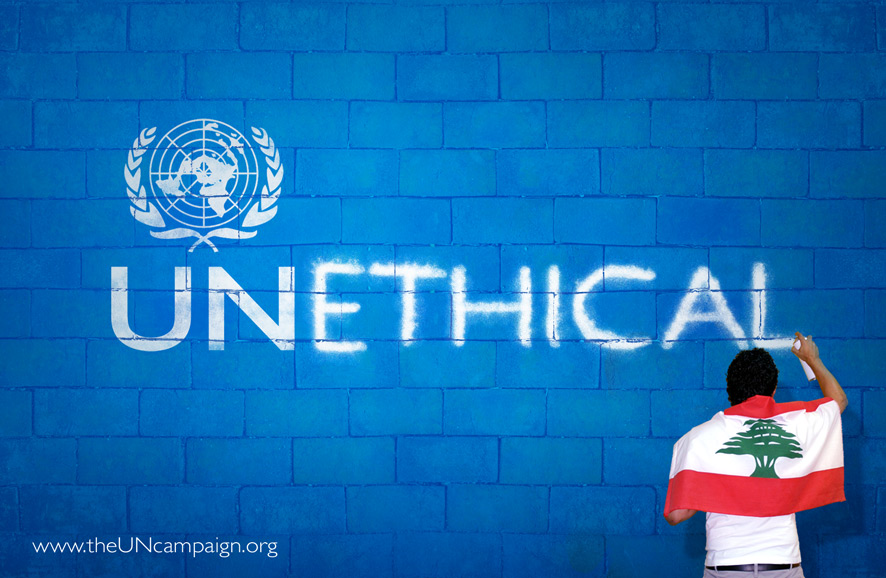

lol Look at how far it's gone..
Israeli Cows 'Invade' South Lebanon

The grass is greener in Hizbullah-controlled territory. Literally.
Dozens of hungry cows whose pasture land in northern Israel has been reduced to ashes by the daily rain of rockets found a hole in the border fence and moved to Lebanon for healthier grazing, the Yediot Aharonot reported Thursday.
According to the daily, the more than 3,000 rockets that have been fired by Hizbullah have set fire to 100 sq km of pasture where cows used to graze. The cows used a breach made in the border by Israeli units who have been battling the group since the start of a massive offensive in Lebanon on July 12. (AFP)
The grass is greener in Hizbullah-controlled territory. Literally.
Dozens of hungry cows whose pasture land in northern Israel has been reduced to ashes by the daily rain of rockets found a hole in the border fence and moved to Lebanon for healthier grazing, the Yediot Aharonot reported Thursday.
According to the daily, the more than 3,000 rockets that have been fired by Hizbullah have set fire to 100 sq km of pasture where cows used to graze. The cows used a breach made in the border by Israeli units who have been battling the group since the start of a massive offensive in Lebanon on July 12. (AFP)
Beirut Attacked
Two big booms were heard in Beirut recently. Phone lines were blocked.. tried to connect to the internet for news.. the net was jammed.. the jams were lasting longer than i thought.. started thinking they hit our communications. Media sources have conflicting reports about where the strikes happened..
El mouhim, Beirut was hit, let's see what the Hizb will do...
El mouhim, Beirut was hit, let's see what the Hizb will do...
Monday, August 07, 2006
Friday, August 04, 2006
What everyone must realise
Hezbollah wants war. This is why it captured the two Israeli soldiers to begin with, and the IDF played streight into their hands by attacking Lebanon and it's civilians and making them IDF victims.
The Lebanese were having a national diolog (i think for the first time in Lebanon's history) and were on their way to disarming hezbollah and were going to effectively declare them as useless. Hezbollah needed this war you see, to survive.
The Lebanese have gone back now to backing "the resistance" as the IDF clearly failed to win any hearts and mind in Lebanon.
In the persuit of satisfying their own egos and scoring points at home, I'm afraid the IDF played a wrong move, which has lead us to the bullshit we find ourselves in that we can't seem to get ourselves out of.
There must be some way to get these two to stop fighting...
The Lebanese were having a national diolog (i think for the first time in Lebanon's history) and were on their way to disarming hezbollah and were going to effectively declare them as useless. Hezbollah needed this war you see, to survive.
The Lebanese have gone back now to backing "the resistance" as the IDF clearly failed to win any hearts and mind in Lebanon.
In the persuit of satisfying their own egos and scoring points at home, I'm afraid the IDF played a wrong move, which has lead us to the bullshit we find ourselves in that we can't seem to get ourselves out of.
There must be some way to get these two to stop fighting...
Wednesday, August 02, 2006
What every Lebanese household should have..
I wonder if it also would be effective on a satellites. hmm..
 Courtesy of Hovs
 Courtesy of Hovs
Let's declare victory and start talking
It's only now starting to occur to me how fighting terrorism has become fighting against a people's right to be free.
Herebelow is a long post, but is definitely worth the read since it is, so far, the best analysis on the Lebanon war i've read so far.
PEACE
http://www.haaretz.com/hasen/spages/743764.html
By Ze'ev Sternhell
It's a widely accepted idea that an Israeli who returns home, even after a short period of time, feels as if he has come to another country. But the opposite is the case: He returns to the same situation, the same problems, the same thought patterns and mainly, the same solutions. Apparently, we did not learn a thing from the first Lebanon War or from the American defeat in Iraq. If the definition of Israel's strategic goal given by the head of Military Intelligence at the beginning of the week reflects the government's position, we are in big trouble.
If Israel really did embark on the war in order to force Lebanon to impose its authority on the south, which is in Hezbollah's hands - or in other words, to force the Lebanese government to begin a civil war in the service of Israel - that is a sign that it is dominated by thinking even more primitive than the thinking that led Ariel Sharon to Beirut about a quarter of a century ago.
But this time, we have exacerbated the problem: At the beginning of the third week of fighting, in spite of the determination and courage of the attacking soldiers, the war seems only to be beginning. That is why we should achieve a cease-fire before the campaign gets out of control, claims victims in vain and, in the long run, even turns into a strategic failure. In the more distant future, it will be necessary to carry out a fundamental structural reform of the government's work procedures and to examine its dependence on the Israel Defense Forces' General Staff. These are truths that are not pleasant to voice at this time, but that is the reality, and we are obliged to confront it.
And in fact, considering the means that the IDF is employing and the ratio of forces in the field, any outcome less than the elimination of Hezbollah as a fighting force will be considered an Israeli failure and a great achievement for the enemy. But since it is impossible to uproot Hezbollah from among the Shiites without destroying the population itself, wisdom requires us to refrain from positing goals that are unachievable.
The inability of a major power to put an end to a guerrilla war is not a new phenomenon: From Napoleon in Spain, through his successors in Algeria, to the Americans in Vietnam and now in Iraq, well-organized armies equipped with modern technology have always failed in attempts to defeat irregular forces. The latter know how to adapt themselves to their surroundings, they are an inseparable part of the population and they serve its material, religious and emotional needs.
When there is fighting, guerrilla organizations want the entire population to be harmed. When everyone is a victim, the hatred will be directed at the enemy more forcefully. That is why bombing residential neighborhoods, power plants, bridges and highways is an act of folly, which plays into Hezbollah's hands and serves its strategic goals: An attack on the overall fabric of life creates a common fate for the fighters and those standing on the sidelines. At the same time, the greater the population's suffering, the greater its alienation from the formal ruling institutions - the government, the parliament and the various security forces that are powerless to save them.
It is an illusion to hope that the 700,000 Lebanese refugees will direct their fury at their government, or that the population that still remains in place will evict the Hezbollah members from among it. As far as the population is concerned, responsibility for its catastrophe lies entirely with Israel, and failure to cooperate with whoever fights against Israel would be considered national treason. It was foolish to assume that the Lebanese political elite would dare to confront Hezbollah and use force against it. And anyway, who was even capable of using force? The Lebanese Army, whose bases were bombed as well?
That is why Israel's interest must be to isolate Hezbollah, to strike a hard blow at its bases and camps, but to avoid harming the infrastructure of life for the general population, even when its gives refuge to those bearing arms. This is not a matter of military ethics, but of a cold practical considerations.
The goal of the war is to restrain Hezbollah, because nobody is dreaming any longer of destroying it. As things look today, at best, Israel will make do with removing it from the border. There, behind the back of an international force, which in the Arab world will in any case be seen as protecting Israel, Hezbollah will be able to reorganize, train, equip itself with more modern weapons and prepare for the next round.
There is no military solution for this situation. IDF Chief of Staff Dan Halutz has already implied that the solution is political. The prime minister, who bears overall responsibility and will be required to give an accounting in the future, would do well not to lag behind the person who in any case will pass him the hot potato.
And a word about the price of American support. Sometimes it seems as if U.S. President George W. Bush wants Israel both to destroy Lebanon and to sustain painful losses. That way, Israel provides him with an excellent alibi for the war in Iraq: The fight against terror is global, the blood price is the same, the methods of operation and the means are identical, and the time needed for victory is long. The Israeli vassal is serving its master no less than the master is providing for its needs.
Herebelow is a long post, but is definitely worth the read since it is, so far, the best analysis on the Lebanon war i've read so far.
PEACE
http://www.haaretz.com/hasen/spages/743764.html
By Ze'ev Sternhell
It's a widely accepted idea that an Israeli who returns home, even after a short period of time, feels as if he has come to another country. But the opposite is the case: He returns to the same situation, the same problems, the same thought patterns and mainly, the same solutions. Apparently, we did not learn a thing from the first Lebanon War or from the American defeat in Iraq. If the definition of Israel's strategic goal given by the head of Military Intelligence at the beginning of the week reflects the government's position, we are in big trouble.
If Israel really did embark on the war in order to force Lebanon to impose its authority on the south, which is in Hezbollah's hands - or in other words, to force the Lebanese government to begin a civil war in the service of Israel - that is a sign that it is dominated by thinking even more primitive than the thinking that led Ariel Sharon to Beirut about a quarter of a century ago.
But this time, we have exacerbated the problem: At the beginning of the third week of fighting, in spite of the determination and courage of the attacking soldiers, the war seems only to be beginning. That is why we should achieve a cease-fire before the campaign gets out of control, claims victims in vain and, in the long run, even turns into a strategic failure. In the more distant future, it will be necessary to carry out a fundamental structural reform of the government's work procedures and to examine its dependence on the Israel Defense Forces' General Staff. These are truths that are not pleasant to voice at this time, but that is the reality, and we are obliged to confront it.
And in fact, considering the means that the IDF is employing and the ratio of forces in the field, any outcome less than the elimination of Hezbollah as a fighting force will be considered an Israeli failure and a great achievement for the enemy. But since it is impossible to uproot Hezbollah from among the Shiites without destroying the population itself, wisdom requires us to refrain from positing goals that are unachievable.
The inability of a major power to put an end to a guerrilla war is not a new phenomenon: From Napoleon in Spain, through his successors in Algeria, to the Americans in Vietnam and now in Iraq, well-organized armies equipped with modern technology have always failed in attempts to defeat irregular forces. The latter know how to adapt themselves to their surroundings, they are an inseparable part of the population and they serve its material, religious and emotional needs.
When there is fighting, guerrilla organizations want the entire population to be harmed. When everyone is a victim, the hatred will be directed at the enemy more forcefully. That is why bombing residential neighborhoods, power plants, bridges and highways is an act of folly, which plays into Hezbollah's hands and serves its strategic goals: An attack on the overall fabric of life creates a common fate for the fighters and those standing on the sidelines. At the same time, the greater the population's suffering, the greater its alienation from the formal ruling institutions - the government, the parliament and the various security forces that are powerless to save them.
It is an illusion to hope that the 700,000 Lebanese refugees will direct their fury at their government, or that the population that still remains in place will evict the Hezbollah members from among it. As far as the population is concerned, responsibility for its catastrophe lies entirely with Israel, and failure to cooperate with whoever fights against Israel would be considered national treason. It was foolish to assume that the Lebanese political elite would dare to confront Hezbollah and use force against it. And anyway, who was even capable of using force? The Lebanese Army, whose bases were bombed as well?
That is why Israel's interest must be to isolate Hezbollah, to strike a hard blow at its bases and camps, but to avoid harming the infrastructure of life for the general population, even when its gives refuge to those bearing arms. This is not a matter of military ethics, but of a cold practical considerations.
The goal of the war is to restrain Hezbollah, because nobody is dreaming any longer of destroying it. As things look today, at best, Israel will make do with removing it from the border. There, behind the back of an international force, which in the Arab world will in any case be seen as protecting Israel, Hezbollah will be able to reorganize, train, equip itself with more modern weapons and prepare for the next round.
There is no military solution for this situation. IDF Chief of Staff Dan Halutz has already implied that the solution is political. The prime minister, who bears overall responsibility and will be required to give an accounting in the future, would do well not to lag behind the person who in any case will pass him the hot potato.
And a word about the price of American support. Sometimes it seems as if U.S. President George W. Bush wants Israel both to destroy Lebanon and to sustain painful losses. That way, Israel provides him with an excellent alibi for the war in Iraq: The fight against terror is global, the blood price is the same, the methods of operation and the means are identical, and the time needed for victory is long. The Israeli vassal is serving its master no less than the master is providing for its needs.
Tuesday, August 01, 2006
Beirut ER: Time's Running Out
This article is an example of the pitiful conditions we have to live by in beirut thanks to the Israeli blockade. Indeed, the IDF is famous for its policies of collective punishment against Arabs. Cigerrettes are fast running out and we have to line up for hours for gas.. that is IF the gas station is open. I decided to get my bicycle repaired today, it's been years i haven't ridden on.. got to get to work somehow! I knew there was a reason why i chose to be a skater in my youth...
http://blogs.abcnews.com/theblotter/2006/07/beirut_er_times.html
July 31, 2006 7:10 PM
Lara Setrakian Reports:
There is not much time left before the lights will go out at the American University of Beirut Medical Center. Oil tankers ready to deliver the much-needed fuel are standing by in nearby waters, but they are being kept out by Israel's blockade.
The hospital has only enough oil to fuel their generators for a maximum of 20 days, or as little as seven days if the state cuts off the little power it now provides, according to Dr. Nadim Cortas, Dean of the medical program.
Israel and others may fear the fuel those tankers carry would go to Hezbollah fighters, used for their trucks and artillery. But Cortas argues this point.
"We see no reason why there should be a blockade on fuel delivery. It could be conditional, only going to hospitals, and it can be monitored. It wouldn't go straight to [Hezbollah] warriors. The blockade…has no benefit to Israel except to inflict more suffering on the civilian population."
What he and other doctors are hoping is that Israel will let the oil through, with either the Lebanese government or third-party agencies, like the Red Cross, making sure it gets to the hospital.
American University Medical Center is Lebanon's biggest and most important hospital. But with the electric grid damaged and the current shortage of fuel, the lights could very well go out for the healthcare provider.
Without the Medical Center, more refugees would likely get their healthcare from Hezbollah's grassroots aid efforts. Hezbollah currently hands out food and care in many of the makeshift shelters around Beirut housing refugees from the south of Lebanon and southern suburbs of Beirut.
If power runs out, it's unclear what would happen to the dozens of refugees and war injured at the hospital, not to mention the routine patients waiting to give birth or receive organ transplants.
"[The Hospital] has received dozens of injured and will receive transfers of dozens more from the south," Dr. Cortas says. "And we've said yes to all of them. Payment is no issue."
http://blogs.abcnews.com/theblotter/2006/07/beirut_er_times.html

July 31, 2006 7:10 PM
Lara Setrakian Reports:
There is not much time left before the lights will go out at the American University of Beirut Medical Center. Oil tankers ready to deliver the much-needed fuel are standing by in nearby waters, but they are being kept out by Israel's blockade.
The hospital has only enough oil to fuel their generators for a maximum of 20 days, or as little as seven days if the state cuts off the little power it now provides, according to Dr. Nadim Cortas, Dean of the medical program.
Israel and others may fear the fuel those tankers carry would go to Hezbollah fighters, used for their trucks and artillery. But Cortas argues this point.
"We see no reason why there should be a blockade on fuel delivery. It could be conditional, only going to hospitals, and it can be monitored. It wouldn't go straight to [Hezbollah] warriors. The blockade…has no benefit to Israel except to inflict more suffering on the civilian population."
What he and other doctors are hoping is that Israel will let the oil through, with either the Lebanese government or third-party agencies, like the Red Cross, making sure it gets to the hospital.
American University Medical Center is Lebanon's biggest and most important hospital. But with the electric grid damaged and the current shortage of fuel, the lights could very well go out for the healthcare provider.
Without the Medical Center, more refugees would likely get their healthcare from Hezbollah's grassroots aid efforts. Hezbollah currently hands out food and care in many of the makeshift shelters around Beirut housing refugees from the south of Lebanon and southern suburbs of Beirut.
If power runs out, it's unclear what would happen to the dozens of refugees and war injured at the hospital, not to mention the routine patients waiting to give birth or receive organ transplants.
"[The Hospital] has received dozens of injured and will receive transfers of dozens more from the south," Dr. Cortas says. "And we've said yes to all of them. Payment is no issue."





Monday, July 31, 2006
Staying On
Staying On
Why I'm not evacuating Beirut.
By Faerlie Wilson
BEIRUT, Lebanon.
From my balcony this afternoon, I watched as French, British, and American evacuees boarded chartered cruise ships in Beirut's port about a half-mile west of my apartment.
And over the last few days, while bombs and artillery pummeled the southern part of the city, I made the decision not to leave Lebanon. Explosions rock my building even as I write this, but I'm staying put.
I'm not crazy, and I harbor no death wish. This is simply the rational decision of someone who has built a life in Lebanon, who believes in this place and its ability to bounce back. I choose to bet on Beirut.
After five visits to Lebanon over as many years, I moved to Beirut from California this February. I'm a 24-year-old American with friends but no family here. But Lebanese hospitality makes it easy to feel at home; it's a warm society that exudes and embodies a sense of interpersonal responsibility. Live here for two weeks and then go out of town, and you'll get a dozen offers to pick you up at the airport upon your return.
So although I'm not Lebanese by blood, I have become Beiruti. There are plenty of us who fit that description, foreigners who fell in love with the place and its people. One friend, an American college student interning for the summer with a member of the Lebanese parliament, called in tears en route to the northern border to tell me her parents had forced her to leave.
"I'm going to stay in Syria as long as I can," she vowed. "In case things settle down and I can come back."
Until the war broke out last week, this was to be Lebanon's golden summer; last year's tourist season having been dampened by the brutal car bomb that killed former Prime Minister Rafik Hariri in February 2005.
This summer started off strong, with concerts by major Western artists that allowed the Lebanese to hope their country was returning to the prewar days when everyone who was anyone - icons like Ella Fitzgerald, Marlon Brando, and Brigitte Bardot - made regular stops in the country. Ricky Martin and 50 Cent performed in May and June, respectively, Sean Paul was on deck for July, and negotiations were under way to bring Snoop Dogg later in the summer. But the most anticipated concert was set for late July: the three-night return of legendary Lebanese diva Fairouz to the Baalbeck festival, where she first earned her fame in the 1950s and '60s.
The after-party for 50 Cent was typical over-the-top Beiruti, held at city's most decadent nightclub, Crystal. Lamborghinis and Ferraris crowded the parking lot; plasticated Lebanese girls in short skirts and spike heels danced on tables as waiters navigated the dance floor balancing trays laden with sparklers and magnums of champagne for high-rolling Saudi tourists, while Fiddy free-styled and openly smoked a joint.
Tourists from the Arab world, Europe, and North America flooded the streets of cities and villages throughout the country. Gulf Arabs in particular have been drawn to Lebanon, especially in a post-9/11 era when they felt unwelcome in the West (and often had trouble obtaining visas). Lebanon offered many of the same attractions as Europe, but in an Arab setting: temperate climate, good shopping, plenty of tourist activities, and most important, heady nightlife and a liberal social atmosphere.
Tourists partied till dawn, stormed the sales at Beirut's designer boutiques, and visited sites like Lebanon's ancient cedar groves and the Roman temples at Baalbeck.
Now those magnificent ruins are surrounded by newer ones: The city of Baalbeck, long a Shiite stronghold, has received a heavy share of the Israeli bombardment.
Falling bombs erase entire villages, fire and smoke cover the horizon, and visions of that promised summer have, in just over a week, evaporated. On the beaches of Damour and Jiyeh, the foreign visitors aren't European sun junkies but Israeli missiles. And the cruise ships docked in the port aren't bringing tourists to Lebanon, they're taking them away.
The contrast between Beirut today and Beirut two weeks ago is so stark, it would be unbearable if it weren't so surreal. This isn't my Beirut. This isn't anyone's Beirut. The frantic, vibrant city has shrunk into a sleepy town, with empty streets and only a handful of restaurants, bars, and shops open for business.
It's amazing how quickly you can get used to living under siege. We've taped our windows, stocked up on supplies, and settled into a perversion of normal life. Electric generators succeed where embattled power stations fail. I've learned what times the electricity, water, and Internet connection usually cut out, and I plan my days accordingly - an old Lebanese ritual from the days of the civil wars.
Candles we bought as decoration are scattered throughout the apartment, half-burned down from long nights without electricity. An Israeli propaganda flier dropped on a university soccer field sticks out of my roommate's copy of the now-obsolete July issue of Time Out Beirut, marking a page listing exhibitions at art galleries that have since boarded up their doors. The magazine only launched this spring, and it was easy to see it as yet another symbol that Beirut was finally being recognized as one of the world's great cities. Travel and Leisure magazine listed Beirut as the ninth-best city in the world for 2006. In this part of the world, fortunes shift very quickly.
Smaller explosions and the rushing of Israeli fighter jets overhead don't startle or frighten me anymore. We are exhausted and have to save our emotional energy for the moments where panic is needed. Still, when larger blasts rattle my windowpanes and make the apartment shudder, I rush to the balcony to figure out which part of my city is being hit. Sometimes, it's an easy game: Three days ago, my roommate and I watched as Israeli warships struck Beirut's port.
I know I'm reasonably safe in my corner of Beirut, and I have a place to go in the mountains if that ceases to be true. Unlike people in many other industries, I still have a job: The magazine where I work decided to publish an August issue - although it will lose money - as a sign of resistance and resilience.
There is painfully little we, the ordinary people of Lebanon, can do to help the situation. So, instead, we do what we can to help each other by donating food and supplies, opening our doors to friends and strangers, and trying to maintain some semblance of normalcy. We aren't giving up.
After the foreigners are gone, local wisdom predicts that the fighting will only get worse. At the very least, there will be less protective padding; a fear of foreign casualties that may have restrained Israel to some degree. Evacuating Beirut would feel a lot like abandoning it. I know that my staying won't keep the Israelis from intensifying their attacks, but at least I won't be complicit, seeing events unfold on a TV screen from the comfort of Cyprus.
So, I'll watch those ships pull away without regret. Lebanon has given me more than I ever could've asked: a home, a sense of belonging, an almost indecent number of happy memories. But aside from any debt to Lebanon, I won't leave because I know how miserable I would be watching the war ravage my country from the outside. As long as my feet are firmly planted on Lebanese soil, I somehow know the country will survive.
People ask me if I'm scared, and I am - but for Lebanon more than for myself. This place and its people deserve far better than what they're getting.
There's a sad, unstated "what will become of us?" question floating around the Lebanese who are left behind. I need to stay here, if only to learn the answer.
Why I'm not evacuating Beirut.
By Faerlie Wilson
BEIRUT, Lebanon.
From my balcony this afternoon, I watched as French, British, and American evacuees boarded chartered cruise ships in Beirut's port about a half-mile west of my apartment.
And over the last few days, while bombs and artillery pummeled the southern part of the city, I made the decision not to leave Lebanon. Explosions rock my building even as I write this, but I'm staying put.
I'm not crazy, and I harbor no death wish. This is simply the rational decision of someone who has built a life in Lebanon, who believes in this place and its ability to bounce back. I choose to bet on Beirut.
After five visits to Lebanon over as many years, I moved to Beirut from California this February. I'm a 24-year-old American with friends but no family here. But Lebanese hospitality makes it easy to feel at home; it's a warm society that exudes and embodies a sense of interpersonal responsibility. Live here for two weeks and then go out of town, and you'll get a dozen offers to pick you up at the airport upon your return.
So although I'm not Lebanese by blood, I have become Beiruti. There are plenty of us who fit that description, foreigners who fell in love with the place and its people. One friend, an American college student interning for the summer with a member of the Lebanese parliament, called in tears en route to the northern border to tell me her parents had forced her to leave.
"I'm going to stay in Syria as long as I can," she vowed. "In case things settle down and I can come back."
Until the war broke out last week, this was to be Lebanon's golden summer; last year's tourist season having been dampened by the brutal car bomb that killed former Prime Minister Rafik Hariri in February 2005.
This summer started off strong, with concerts by major Western artists that allowed the Lebanese to hope their country was returning to the prewar days when everyone who was anyone - icons like Ella Fitzgerald, Marlon Brando, and Brigitte Bardot - made regular stops in the country. Ricky Martin and 50 Cent performed in May and June, respectively, Sean Paul was on deck for July, and negotiations were under way to bring Snoop Dogg later in the summer. But the most anticipated concert was set for late July: the three-night return of legendary Lebanese diva Fairouz to the Baalbeck festival, where she first earned her fame in the 1950s and '60s.
The after-party for 50 Cent was typical over-the-top Beiruti, held at city's most decadent nightclub, Crystal. Lamborghinis and Ferraris crowded the parking lot; plasticated Lebanese girls in short skirts and spike heels danced on tables as waiters navigated the dance floor balancing trays laden with sparklers and magnums of champagne for high-rolling Saudi tourists, while Fiddy free-styled and openly smoked a joint.
Tourists from the Arab world, Europe, and North America flooded the streets of cities and villages throughout the country. Gulf Arabs in particular have been drawn to Lebanon, especially in a post-9/11 era when they felt unwelcome in the West (and often had trouble obtaining visas). Lebanon offered many of the same attractions as Europe, but in an Arab setting: temperate climate, good shopping, plenty of tourist activities, and most important, heady nightlife and a liberal social atmosphere.
Tourists partied till dawn, stormed the sales at Beirut's designer boutiques, and visited sites like Lebanon's ancient cedar groves and the Roman temples at Baalbeck.
Now those magnificent ruins are surrounded by newer ones: The city of Baalbeck, long a Shiite stronghold, has received a heavy share of the Israeli bombardment.
Falling bombs erase entire villages, fire and smoke cover the horizon, and visions of that promised summer have, in just over a week, evaporated. On the beaches of Damour and Jiyeh, the foreign visitors aren't European sun junkies but Israeli missiles. And the cruise ships docked in the port aren't bringing tourists to Lebanon, they're taking them away.
The contrast between Beirut today and Beirut two weeks ago is so stark, it would be unbearable if it weren't so surreal. This isn't my Beirut. This isn't anyone's Beirut. The frantic, vibrant city has shrunk into a sleepy town, with empty streets and only a handful of restaurants, bars, and shops open for business.
It's amazing how quickly you can get used to living under siege. We've taped our windows, stocked up on supplies, and settled into a perversion of normal life. Electric generators succeed where embattled power stations fail. I've learned what times the electricity, water, and Internet connection usually cut out, and I plan my days accordingly - an old Lebanese ritual from the days of the civil wars.
Candles we bought as decoration are scattered throughout the apartment, half-burned down from long nights without electricity. An Israeli propaganda flier dropped on a university soccer field sticks out of my roommate's copy of the now-obsolete July issue of Time Out Beirut, marking a page listing exhibitions at art galleries that have since boarded up their doors. The magazine only launched this spring, and it was easy to see it as yet another symbol that Beirut was finally being recognized as one of the world's great cities. Travel and Leisure magazine listed Beirut as the ninth-best city in the world for 2006. In this part of the world, fortunes shift very quickly.
Smaller explosions and the rushing of Israeli fighter jets overhead don't startle or frighten me anymore. We are exhausted and have to save our emotional energy for the moments where panic is needed. Still, when larger blasts rattle my windowpanes and make the apartment shudder, I rush to the balcony to figure out which part of my city is being hit. Sometimes, it's an easy game: Three days ago, my roommate and I watched as Israeli warships struck Beirut's port.
I know I'm reasonably safe in my corner of Beirut, and I have a place to go in the mountains if that ceases to be true. Unlike people in many other industries, I still have a job: The magazine where I work decided to publish an August issue - although it will lose money - as a sign of resistance and resilience.
There is painfully little we, the ordinary people of Lebanon, can do to help the situation. So, instead, we do what we can to help each other by donating food and supplies, opening our doors to friends and strangers, and trying to maintain some semblance of normalcy. We aren't giving up.
After the foreigners are gone, local wisdom predicts that the fighting will only get worse. At the very least, there will be less protective padding; a fear of foreign casualties that may have restrained Israel to some degree. Evacuating Beirut would feel a lot like abandoning it. I know that my staying won't keep the Israelis from intensifying their attacks, but at least I won't be complicit, seeing events unfold on a TV screen from the comfort of Cyprus.
So, I'll watch those ships pull away without regret. Lebanon has given me more than I ever could've asked: a home, a sense of belonging, an almost indecent number of happy memories. But aside from any debt to Lebanon, I won't leave because I know how miserable I would be watching the war ravage my country from the outside. As long as my feet are firmly planted on Lebanese soil, I somehow know the country will survive.
People ask me if I'm scared, and I am - but for Lebanon more than for myself. This place and its people deserve far better than what they're getting.
There's a sad, unstated "what will become of us?" question floating around the Lebanese who are left behind. I need to stay here, if only to learn the answer.
Subscribe to:
Posts (Atom)